
Quick Answer
To dispose of pharmaceutical waste in Dubai, separate expired, recalled and unusable medicines from active stock, store them in a labelled secure area, and hand them to a medical waste contractor approved by Dubai Municipality. Keep the Pharmaceutical Waste Collection Certificate they issue. Controlled and narcotic drugs need extra regulatory approval before collection. Never flush medicines or put them in general waste.
A shelf of expired tablets looks harmless. It is not. Expired and unwanted medicines can be taken by mistake, diverted for misuse or washed into the water system, and a pharmacy that cannot show how it disposed of them has a compliance problem.
This guide explains what counts as pharmaceutical waste, what the rules expect from licensed facilities in Dubai, and how to build a disposal routine that is safe, documented and easy to run.
What Is Pharmaceutical Waste?
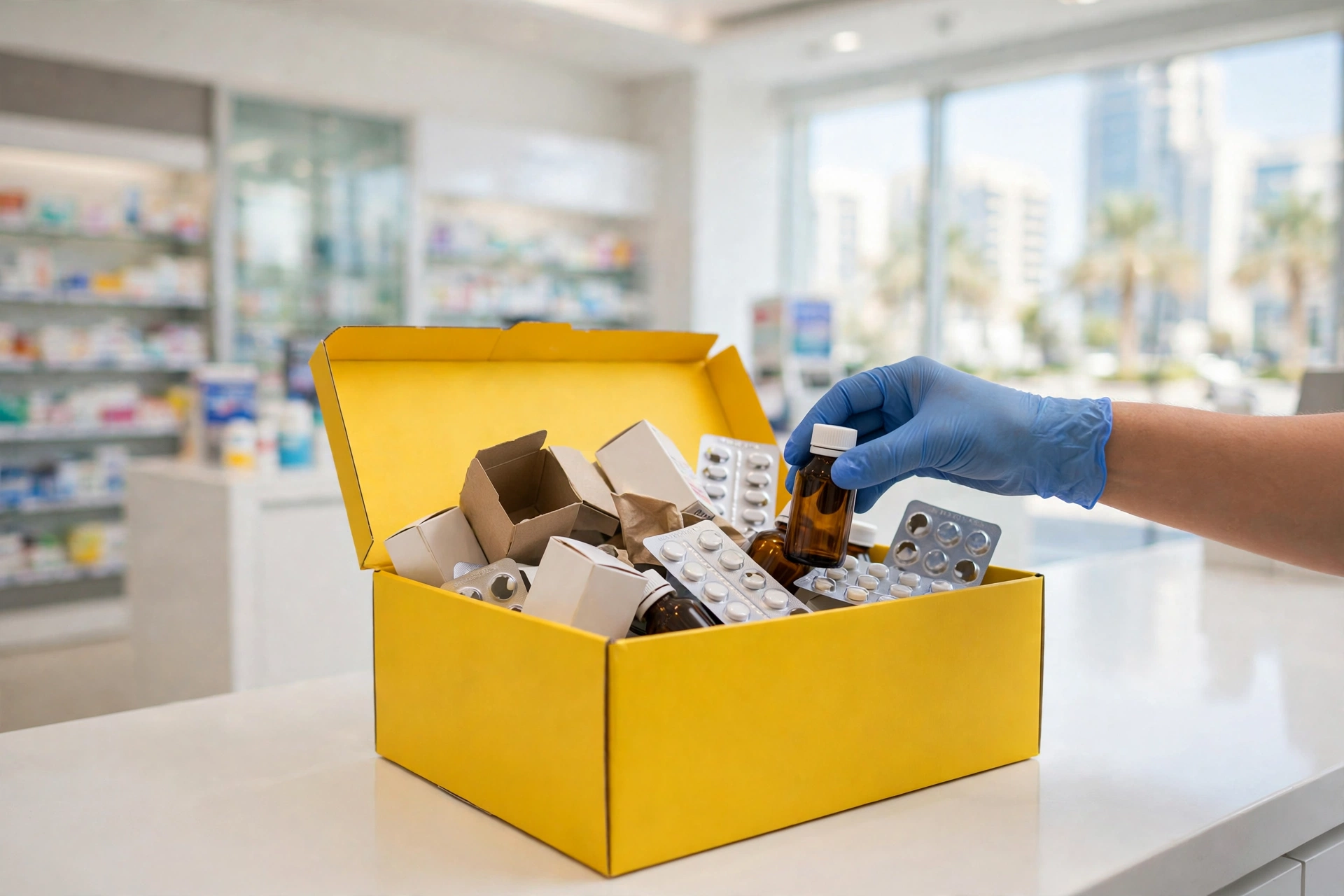
Pharmaceutical waste is any medicine or medicinal product that can no longer be used, or should not be used, and needs controlled disposal. Typical items include:
- Expired tablets, capsules, syrups, creams and injectables
- Partly used vials and ampoules that cannot be reused
- Recalled or defective batches
- Unregistered or unapproved products
- Free medication samples that cannot be dispensed
- Returned or withdrawn medicines
- Spilled or contaminated stock
- Controlled and narcotic drugs that are expired or unusable
DHA inspection checklists for pharmacies list several of these categories: products not registered or approved by the authorities, expired or defective items, recalled medications, products introduced illegally into the country, and free medication samples. The same checklist expects expired stock to be isolated from usable stock in a designated area.
Why Proper Pharmaceutical Waste Disposal Matters
Patient safety. Expired medicine kept near active stock is a dispensing error waiting to happen. Some medicines also lose strength or change chemically after expiry.
Misuse and diversion. Strong painkillers, sedatives and controlled drugs are attractive targets. Unrecorded waste is a security gap.
Environmental protection. Medicines poured down a sink or flushed can end up in the water system. Dubai Health Authority has run public campaigns telling residents not to flush expired medicines.
Regulatory compliance. DHA policy expects health facilities to dispose of medicines through an approved route and keep proof. All DHA licensed health facilities should hold a Pharmaceutical Waste Collection Certificate from a contracted medical waste company approved by Dubai Municipality.
Key Benefits of Proper Disposal
- Cleaner stock control. Removing expired items regularly makes stocktakes faster and more accurate.
- Audit-ready records. A filed certificate answers the inspector’s first question.
- Lower risk. Fewer chances of accidental dispensing or theft.
- Cheaper handling. Planned collections cost less than emergency clear-outs after a failed inspection.
- A better reputation. Patients and partners trust facilities that run tight, documented processes.
Common Problems and Challenges
Mixing expired stock with active stock. The most common error, and the most dangerous.
Throwing medicines into general or clinical waste. Pharmaceutical waste needs its own stream. It should not sit in a general bin or in a yellow clinical bag meant for dressings and swabs.
Pouring liquids down the sink. It is quick, but it sends active ingredients into the drainage system.
No written disposal plan. DHA’s medications disposal policy says health facilities must have a Medications Disposal and Waste Management plan approved by the pharmacist in charge or pharmacy manager.
Losing the paperwork. Collection happened, but the certificate cannot be found.
Unclear handling of controlled drugs. These follow a stricter route and cannot simply go in the next general pick-up.
Medicine and sharps in the same container. Syringes and needles belong in a sharps container, not in a medicine disposal box. See our guide on sharps waste disposal.
Important Factors to Consider
Classify before you collect. Sort waste into expired stock, recalled stock, damaged stock, samples and controlled drugs. Each can follow a slightly different path.
Controlled and narcotic drugs. These need regulatory approval before destruction. DHA’s policy states that expired or unused narcotic drugs are subject to DHA narcotic disposal request approval and are then returned to the MOHAP Central Medical Stores. The Ministry of Health and Prevention also runs an e-service for disposing of expired and unusable medical and pharmaceutical products, including controlled and uncontrolled medicines. Always confirm the current route with your regulator before moving controlled stock.
Storage until collection. Use a locked, labelled area away from patients, away from heat and clearly separated from usable stock. Record what goes in, with dates and quantities.
Contractor approval. Ask to see proof that the contractor is approved by Dubai Municipality for medical waste. DHA policy also expects the facility to have a contract with the nominated disposal entity.
Packaging. Use sturdy, leak-proof, labelled containers. Keep blister packs, bottles and liquids in separate boxes where possible.
Cytotoxic and hazardous drugs. Cancer treatment drugs and similar hazardous products need dedicated containers and handling. Do not mix them with ordinary expired stock.
Best Practices and Expert Recommendations
- Run a monthly expiry check. Pull items expiring within the next one to three months and decide whether to sell, return or discard them.
- Quarantine expired stock immediately. Move it to a labelled shelf or cage the same day.
- Keep a disposal register. Record product name, batch, quantity, expiry date and date removed.
- Write a disposal plan. Have your pharmacist in charge sign it and review it yearly.
- Separate waste streams. Medicines, sharps, clinical waste and laboratory waste each need their own containers.
- Never flush or pour medicines away. Absorb small liquid amounts as advised by the health authorities and hand them over for proper disposal.
- File every certificate. Scan it, name it by date and keep the original.
- Train every pharmacy team member. Include technicians, assistants and cleaners, so nobody discards stock informally.
- Plan for recalls. Keep a ready process for isolating and returning or discarding recalled batches.
For the wider compliance picture, see our guide to medical waste disposal rules.
How Professional Pharmaceutical Waste Services Help
A pharmacy manager has a hundred other jobs. Chasing a contractor, finding suitable packaging, arranging transport and filing certificates takes time that belongs on patient care.
A professional service helps by:
- Advising on how to segregate and pack different categories of pharmaceutical waste
- Collecting on a fixed schedule or on demand
- Moving waste in suitable vehicles with proper handling
- Providing documentation after each collection
- Adjusting frequency as your stock turnover changes
Hospitals with high turnover usually need frequent collection. A small pharmacy may only need a few visits a year, timed after stock reviews.
Why Choose Globalex for Pharmaceutical Waste Collection
Globalex is a Dubai group with its office in Al Nahda, serving clinics, hospitals, laboratories and pharmacies across the city. Our pharmaceutical waste collection service handles expired and unused medicines, and sits inside a wider medical waste service that also covers sharps, clinical and laboratory waste.
What clients value:
- Licensed and insured crews trained to collect packed pharmaceutical waste safely
- A certificate after every job, so your records are complete for audits
- Same-day response on weekdays when stock needs to leave quickly
- One provider for every medical waste stream, which means one contract and one contact
- Clear quotes before work begins, with no surprise charges
- Availability 24 hours, Monday to Saturday
Areas close to our office, including Al Nahda, Al Qusais, Deira and Mirdif, are the quickest to reach. See our page on medical waste collection in Deira for local coverage.
Our Service Process
- Tell us what you have. Call or WhatsApp with your facility type, location and a rough idea of volume and categories.
- Get a clear quote. We confirm scope, frequency and price before anything starts.
- Collection. Our crew arrives at the agreed time and collects the packed, labelled waste.
- Documentation. You receive a certificate for the collection.
- Repeat schedule. For regular clients we set a recurring plan and adjust it as your needs change.
If you hold controlled drugs for disposal, tell us when you call. We will explain how collection fits with the approval steps your regulator requires.
Frequently Asked Questions
How do you dispose of expired medicines in Dubai?
Pharmacies and clinics should separate expired medicines from active stock, store them securely and hand them to a medical waste contractor approved by Dubai Municipality. They should keep the Pharmaceutical Waste Collection Certificate as proof. Households can return unused medicines to a pharmacy or a hospital take-back programme.
Can I flush expired medicines down the toilet or sink?
No. Flushing or pouring medicines away can put active ingredients into the water system. Return them to a pharmacy or hand them to an approved collection service.
Do clinics need a pharmaceutical waste collection certificate?
DHA policy says licensed health facilities should hold a Pharmaceutical Waste Collection Certificate from a Dubai Municipality-approved contractor. It is your proof that medicines were disposed of safely.
How are controlled drugs disposed of?
Controlled and narcotic drugs follow a separate approval route through the health authorities before destruction. Do not include them in a routine pick-up without confirming the approval steps first.
What is the difference between pharmaceutical waste and clinical waste?
Pharmaceutical waste is medicine that is expired, recalled or unusable. Clinical waste covers items such as dressings, swabs and PPE. They use different containers and are collected separately.
How often should a pharmacy dispose of expired stock?
It depends on turnover, but a monthly expiry check is good practice. Many pharmacies schedule collection after each stock review or once enough quarantined stock has built up.
Conclusion
Pharmaceutical waste is a small part of your operation but a large part of your risk. Regular expiry checks, a written disposal plan, a locked quarantine area and a contractor you can verify keep patients safe and your records clean.
Ready to Arrange Pharmaceutical Waste Collection?
Whether you run a neighbourhood pharmacy, a clinic or a hospital store, Globalex can set up a collection plan that fits your stock and your schedule.
Call: +971 55 928 6666
WhatsApp: https://wa.me/971559286666
Email: gm@globalex.ae
Office: Mai Tower, Office 1501, Al Nahda 1, Dubai
Request a free quote today and get a clear price before any work begins. Contact us to arrange collection.