
July 28, 2026
Introduction
Every summer, Dubai temperatures push past 45°C, and rooftop water tanks can heat up even more than the air around them. That heat doesn’t just make your shower uncomfortably warm it accelerates water tank contamination in ways most residents never think about until the water starts smelling odd or running cloudy.
At Globalex, we’ve been supplying sweet water, cleaning storage tanks, and maintaining sewage systems across Dubai and the wider UAE since 2006. Summer is consistently our busiest season for tank cleaning requests, and there’s a clear reason for that: heat, stagnation, and sediment combine to turn a clean tank into a breeding ground for bacteria within weeks. This guide breaks down exactly why that happens, how often you should be cleaning your tank, and what to do about it before it becomes a health issue.
What Is Water Tank Contamination
Water tank contamination happens when stored water becomes unsafe or unpleasant due to bacterial growth, algae, sediment, rust, or foreign debris building up inside a storage tank. In Dubai, most residential and commercial properties rely on rooftop or ground-level tanks to store sweet water or potable water supplied by tanker, since not every building draws directly from a continuous municipal line. That stored water sits in the tank for hours or days before use, which gives contaminants time to develop if the tank isn’t properly sealed, insulated, or cleaned on schedule.
Contamination isn’t always visible. Water can look completely clear and still carry bacteria like E. coli or Pseudomonas, mineral sediment, or biofilm clinging to the tank walls. This is exactly why Dubai Municipality has specific cleaning frequency guidelines for residential and commercial tanks, and why relying on visual inspection alone isn’t enough.
Why Summer Heat Makes Contamination Worse
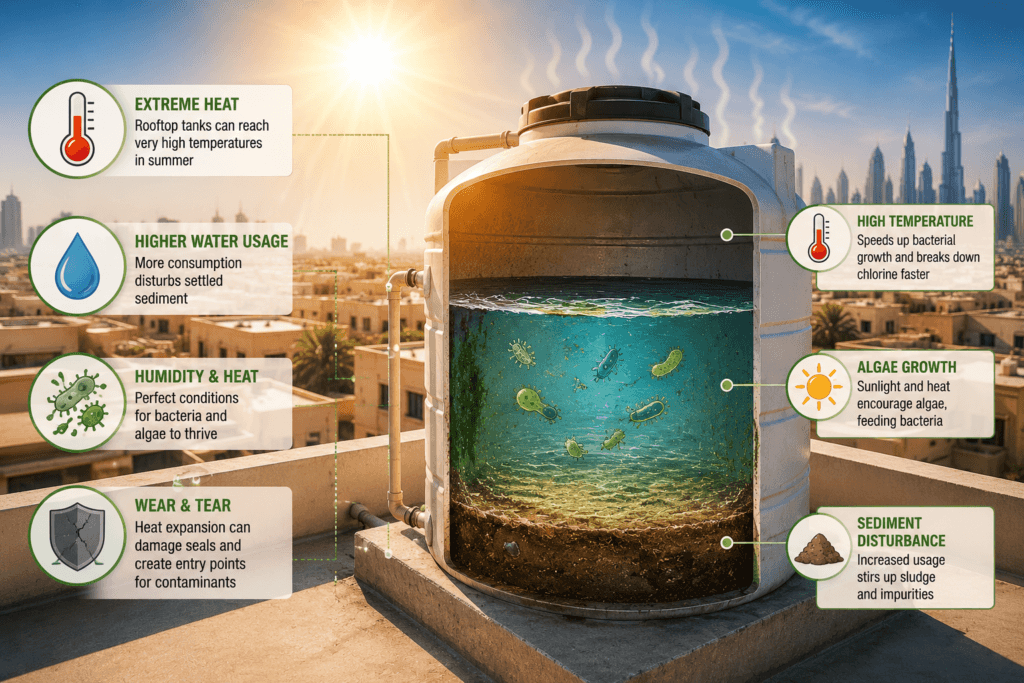
Water tank contamination doesn’t happen at the same rate all year. Summer conditions in Dubai create a near-perfect environment for bacterial and algal growth, for a few specific reasons:
Rooftop tank temperatures spike dramatically. A rooftop tank exposed to direct sun can reach internal water temperatures well above 40°C. Bacteria multiply far faster in warm water than in cooler winter conditions, and that warmth also breaks down any residual chlorine faster, leaving the water less protected.
Higher water consumption means more turnover, but also more disturbance of sediment. Increased usage during summer stirs up sediment that has settled at the bottom of the tank, pulling it into the water supply that reaches taps and showers.
Humidity and heat both encourage algae growth, particularly in tanks with damaged seals or lids that allow light to enter. Algae then becomes a food source for bacteria, compounding the problem.
Thermal expansion stresses tank seals and joints, especially in older fiberglass or concrete tanks, creating small gaps where dust, insects, or contaminants can enter over time.
Put together, these conditions mean a tank that was perfectly fine in December can become a real contamination risk by July if it hasn’t been cleaned recently.
Key Benefits of Regular Tank Cleaning
Keeping your tank on a proper cleaning schedule isn’t just about compliance it delivers real, tangible benefits:
- Protects household and workforce health by removing bacteria before it reaches drinking or bathing water
- Extends the lifespan of your tank and plumbing system by clearing sediment and mineral buildup that corrodes internal surfaces
- Improves water taste, odor, and clarity, which matters for hospitality properties, offices, and residential buildings alike
- Keeps you compliant with Dubai Municipality regulations, avoiding fines or issues during property inspections
- Reduces the risk of pest infestations, since stagnant, dirty tanks attract insects and rodents
Common Problems and Challenges With Water Tanks in Summer
Property owners across Dubai run into a familiar set of issues once the heat sets in:
Cloudy or discolored water is usually the first visible sign that sediment or rust has built up inside the tank. Unpleasant odor, often described as musty or sulfuric, typically points to bacterial growth or a dead insect or rodent that entered through a damaged lid. Reduced water pressure can result from sediment clogging inlet or outlet valves. Visible algae or slime on tank walls is common in tanks with cracked lids or seals that let in sunlight. Faster tank refill needs, since dirty tanks often need to be drained and flushed more frequently, adding cost and inconvenience.
Ignoring these signs doesn’t make them go away it usually means the contamination is getting worse while the water continues to be used for cooking, bathing, or drinking.
Important Factors to Consider
Before deciding on a cleaning schedule, a few factors specific to your property should shape the decision:
Tank material matters significantly. Concrete tanks tend to develop more sediment over time, while fiberglass and stainless steel tanks are generally easier to clean and less prone to bacterial adhesion.
Tank location also plays a role rooftop tanks exposed to direct sunlight heat up faster than shaded or ground-level tanks, and should be cleaned more frequently during summer.
Property type and occupancy affect turnover rate. A villa with a family of five uses water very differently than a labor camp, hotel, or commercial building with dozens of occupants, and higher usage generally requires more frequent cleaning.
Water source is another consideration. Properties relying on tankered sweet water supply should confirm their supplier follows Dubai Municipality-approved sourcing and hygiene standards, since contamination can sometimes originate before the water even reaches the tank.
Best Practices and Expert Recommendations
Based on our experience servicing residential and commercial tanks across Dubai, here’s what we recommend:
Clean residential tanks at least twice a year, and increase that to every 3-4 months during peak summer (May through September) if the tank is rooftop-mounted or exposed to direct sun.
Clean commercial and labor camp tanks quarterly at minimum, given higher usage volumes and stricter compliance expectations from Dubai Municipality.
Inspect tank lids and seals before summer begins to catch any cracks or gaps that could let in light, dust, or insects.
Test water quality periodically, especially if you notice any change in smell, taste, or clarity, rather than waiting for a scheduled cleaning date.
Avoid DIY cleaning attempts for anything beyond surface wiping full tank cleaning requires proper drainage, scrubbing, disinfection, and safe disposal of wastewater, which is difficult to do correctly without the right equipment.
How Professional Services Help
A professional tank cleaning service does more than just scrub the interior. It typically includes fully draining the tank, removing sediment and sludge from the base, scrubbing algae and biofilm from the walls, disinfecting with approved sanitization agents, and safely disposing of the wastewater removed during the process something that itself requires proper sewage or wastewater removal handling.
Professional teams also inspect for structural issues like cracked seals, damaged inlet valves, or signs of rust that a homeowner might miss. This matters because a tank that looks clean after a quick rinse can still harbor bacteria in cracks and corners that only proper scrubbing and disinfection can reach.
Why Choose Globalex
Globalex has been delivering waste management, sweet water supply, and tank cleaning services across Dubai and the UAE since 2006. We work with residential communities, commercial properties, hospitality groups, and government entities, backed by a modern fleet and a trained team that understands Dubai Municipality’s requirements inside and out.
Beyond tank cleaning, we also handle sanitization and disinfection, sewage tanker services, and potable water supply which means if your tank cleaning reveals a bigger issue, like a damaged tank or a need for sewage removal, we can handle it under one service call rather than referring you elsewhere. Our track record with clients including Emaar, Meraas, and Dubai Municipality itself reflects the consistency we bring to every job, large or small.
Our Service Process
Our tank cleaning process is built to minimize disruption to your property while ensuring thorough results:
- Assessment — We evaluate your tank’s size, material, location, and current condition.
- Water drainage — The tank is safely drained, with wastewater handled according to environmental regulations.
- Sediment and sludge removal — We physically remove buildup from the tank base and walls.
- Scrubbing and disinfection — Interior surfaces are scrubbed and treated with approved sanitization solutions.
- Rinse and refill — The tank is rinsed thoroughly before being refilled with clean sweet or potable water.
- Final inspection — We check seals, lids, and valves, flagging any repairs needed before we leave.
Frequently Asked Questions
How often should I clean my water tank in Dubai during summer?
For rooftop tanks exposed to direct sunlight, cleaning every 3-4 months during summer (May to September) is recommended, compared to twice a year during cooler months.
How do I know if my water tank is contaminated?
Common signs include cloudy or discolored water, an unusual odor, reduced water pressure, or visible algae and slime on the tank’s interior walls.
Does Dubai Municipality require regular water tank cleaning?
Yes, Dubai Municipality has guidelines requiring periodic tank cleaning for residential and commercial properties to maintain water quality and hygiene standards.
Can I clean my water tank myself? Light surface cleaning is possible, but full cleaning requires proper drainage, scrubbing, disinfection, and safe wastewater disposal, which is best handled by a professional service with the right equipment.
What causes algae growth inside a water tank?
Algae typically grows when sunlight enters the tank through a cracked lid or damaged seal, combined with warm summer temperatures that accelerate growth.
Is tankered sweet water safe to store long-term?
Sweet water supplied by tanker is safe when sourced from an approved supplier and stored in a properly sealed, regularly cleaned tank. Extended storage without cleaning increases contamination risk, especially in summer heat.
Conclusion
Dubai’s summer heat doesn’t just make daily life uncomfortable — it actively accelerates bacterial growth, sediment buildup, and algae development inside water storage tanks. What might be a minor issue in winter can turn into a genuine health risk within weeks once temperatures climb. Staying ahead of it means understanding your tank’s specific risk factors and sticking to a cleaning schedule that matches Dubai’s climate, not a generic annual routine.
Get Your Water Tank Cleaned Before Contamination Sets In
If it’s been more than a few months since your last tank cleaning, don’t wait for cloudy water or a bad smell to tell you it’s overdue. Globalex offers professional water tank cleaning, sanitization, and sweet water supply services across Dubai and the UAE.
Call us at +971-55-9286666 or 04-2837999, message us on WhatsApp at wa.me/971559286666, or email gm@globalex.ae to schedule your tank cleaning today. You can also request a free quote here.