
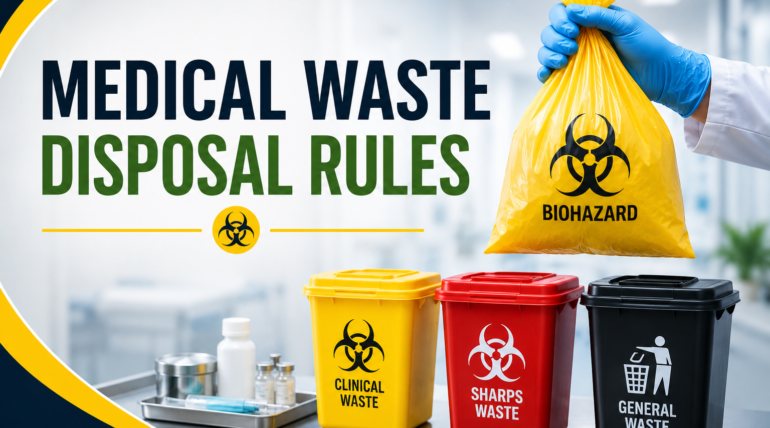
July 8, 2026
Healthcare facilities across Dubai generate medical waste every day, from used syringes and blood-soaked dressings to expired medicines and laboratory specimens. Unlike ordinary waste, these materials can spread infections, harm healthcare workers, contaminate the environment, and expose clinics to significant legal penalties if not handled correctly.
Whether you operate a private clinic in Al Nahda, a dental practice in Deira, a medical center in Jumeirah, a diagnostic laboratory in Sharjah, or a hospital in Abu Dhabi, understanding UAE medical waste regulations is essential. Compliance is not simply a legal requirement it is a responsibility to protect patients, staff, and the wider community.
At Globalex UAE, we provide licensed, reliable, and fully compliant medical waste collection Dubai services for clinics, hospitals, laboratories, pharmacies, and healthcare facilities across the UAE. This guide explains everything your facility needs to know to stay compliant with Dubai regulations.
Why Medical Waste Compliance Is Non-Negotiable in Dubai
Dubai maintains some of the highest healthcare and environmental standards in the region. Healthcare facilities must comply with regulations issued by the Dubai Health Authority (DHA), Dubai Municipality, and other relevant UAE environmental authorities regarding the handling, storage, transportation, and disposal of medical waste.
Improper disposal can result in:
- Spread of infectious diseases
- Needle-stick injuries
- Environmental contamination
- Air and water pollution
- Legal penalties
- Damage to your clinic’s reputation
- Suspension of healthcare licenses
A compliant medical waste management system protects patients, healthcare workers, waste handlers, and the community while ensuring your facility passes inspections without issues.
What Counts as Medical Waste?
Many healthcare providers underestimate how much of their daily waste requires special handling. Medical waste includes several different categories, each requiring specific disposal procedures.
1. Clinical Waste
Clinical waste includes materials contaminated with blood or bodily fluids during patient treatment.
Examples include:
- Used bandages
- Surgical dressings
- Disposable gloves
- PPE
- Face masks
- Surgical gowns
- Cotton swabs
- Wound care materials
Because these items may contain infectious organisms, they must never be disposed of with general municipal waste.
2. Sharps Waste
Sharps present one of the highest risks to healthcare workers.
Examples include:
- Needles
- Syringes
- Scalpel blades
- Lancets
- Surgical blades
- Broken contaminated glass
Sharps must always be placed immediately into puncture-resistant sharps containers after use.
3. Pharmaceutical Waste
Healthcare facilities also generate pharmaceutical waste that cannot enter the normal waste stream.
Examples include:
- Expired medicines
- Damaged medications
- Vaccines
- Antibiotics
- Cytotoxic drugs
- Controlled pharmaceuticals
Improper disposal may contaminate water systems and create environmental hazards.
4. Laboratory Waste
Medical laboratories generate potentially infectious waste every day.
This includes:
- Blood samples
- Tissue cultures
- Laboratory slides
- Petri dishes
- Specimens
- Microbiological cultures
- Testing materials
Proper containment and timely collection are critical to reducing contamination risks.
5. Pathological Waste
Pathological waste requires highly controlled disposal due to its biological nature.
Examples include:
- Human tissue
- Organs
- Placenta
- Body fluids
- Anatomical specimens
Only licensed medical waste disposal providers should transport and dispose of these materials.
Legal Requirements in Dubai for Medical Waste
Healthcare facilities are legally responsible for ensuring medical waste is managed correctly from the moment it is generated until final disposal.
Below are the key compliance requirements every clinic should follow.
1. DHA Licensing Requirements
Healthcare facilities producing medical waste must comply with licensing requirements established by the Dubai Health Authority.
Facilities are responsible for:
- Proper waste segregation
- Safe storage
- Maintaining disposal records
- Using licensed waste contractors
- Staff training
- Following approved disposal procedures
Responsibility remains with the healthcare facility even after waste leaves the premises.
2. Segregate Waste at the Point of Generation
Medical waste should always be separated immediately where it is produced.
Staff should never mix:
- General waste
- Infectious waste
- Pharmaceutical waste
- Sharps
- Pathological waste
Mixing waste increases disposal costs and creates serious compliance issues.
3. Use Color-Coded Waste Containers
Proper color coding is essential for safe medical waste management.
Common categories include:
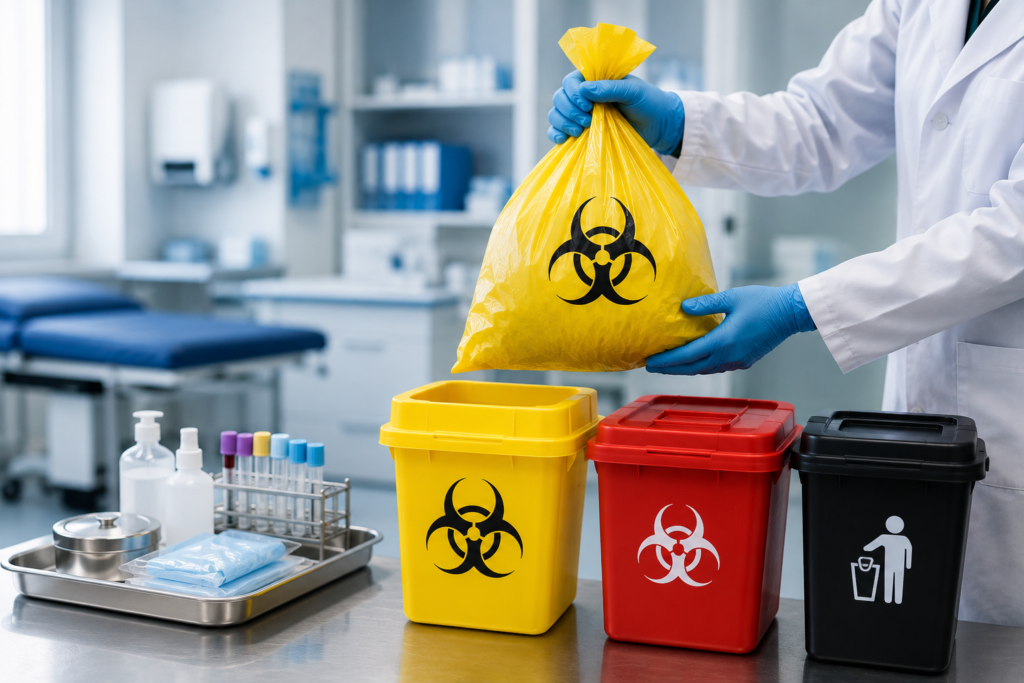
- Yellow: Infectious clinical waste
- Red: Highly infectious waste or pathological waste (depending on facility protocols)
- Black: General non-hazardous waste
- Sharps Containers: Rigid puncture-resistant containers for needles and blades
Bins should always be clearly labelled and easily accessible throughout the healthcare facility.
4. Secure and Label Medical Waste Storage
Before collection, medical waste must be stored in a secure designated area.
Storage areas should be:
- Locked
- Clearly labelled
- Well ventilated
- Protected from public access
- Regularly cleaned
- Designed to prevent leakage or contamination
Waste should never remain stored longer than recommended by local regulations.
5. Collection by Licensed Contractors Only
Medical waste cannot be transported by ordinary waste collection companies.
Healthcare facilities must use approved and licensed medical waste collection providers who comply with UAE regulations.
Licensed contractors ensure:
- Safe transport
- Traceable collection
- Approved treatment
- Environmentally responsible disposal
- Regulatory compliance
Choosing an experienced provider significantly reduces compliance risks.
6. Maintain Complete Documentation
Every healthcare facility should maintain comprehensive records of its medical waste.
Typical documentation includes:
- Waste transfer notes
- Collection records
- Disposal manifests
- Contractor certificates
- Staff training records
- Inspection reports
Maintaining accurate documentation demonstrates compliance during audits and inspections.
Penalties for Non-Compliance
Ignoring medical waste regulations can have serious financial and operational consequences.
Possible penalties include:
Financial Fines
Healthcare facilities may receive significant fines for improper waste handling, storage, transportation, or disposal.
Suspension of Healthcare Licenses
Serious or repeated violations may result in regulatory action that affects clinic operations and licensing.
Reputational Damage
Patients expect healthcare providers to operate safely.
Poor waste management can quickly damage public trust and negatively affect patient confidence.
Public Health Risks
Improper disposal increases the risk of:
- Disease transmission
- Injuries to sanitation workers
- Environmental pollution
- Community health hazards
Preventing these risks should always be a top priority.
How to Set Up a Compliant Medical Waste System
Creating a compliant waste management system does not have to be complicated. Following these best practices can help your clinic remain inspection-ready throughout the year.
Install Appropriate Segregation Bins
Ensure every treatment room, laboratory, and clinical area has the correct waste containers.
Staff should never need to search for appropriate disposal bins.
Train Every Employee
Compliance depends on people.
Training should include:
- Waste identification
- Proper segregation
- Sharps handling
- Emergency spill procedures
- PPE requirements
- Reporting incidents
Clinical, administrative, and cleaning staff should all receive regular refresher training.
Work with a Licensed Medical Waste Collection Company
Partnering with an experienced provider simplifies compliance and ensures waste is managed correctly from collection to final disposal.
A professional waste management partner will provide:
- Scheduled collections
- Emergency pickups
- Regulatory documentation
- Safe transportation
- Compliant treatment and disposal
Maintain Records for at Least Three Years
Maintain organised records including:
- Collection schedules
- Disposal certificates
- Waste manifests
- Training records
- Inspection reports
Well-maintained documentation demonstrates responsible waste management during regulatory inspections.
Why Choose Globalex UAE for Medical Waste Collection?
Globalex UAE provides reliable, compliant medical waste collection services for healthcare facilities across Dubai and the UAE.
We serve:
- Hospitals
- Medical centres
- Dental clinics
- Cosmetic clinics
- Diagnostic laboratories
- Veterinary clinics
- Pharmacies
Our services include:
- Scheduled collections
- Licensed transportation
- Safe handling
- Regulatory documentation
- Environmentally responsible disposal
- Fast response across Dubai, Sharjah, Abu Dhabi, and surrounding Emirates
Our experienced team understands local compliance requirements and works closely with healthcare providers to ensure complete peace of mind.
Frequently Asked Questions
Who is responsible for medical waste in a clinic?
The healthcare facility is ultimately responsible for ensuring medical waste is handled correctly. While daily responsibilities may be delegated to facility managers or clinical staff, the organisation remains accountable for regulatory compliance.
Can a dental clinic use a regular waste collection service?
No. Dental clinics generate clinical and sharps waste that must be collected by a licensed medical waste contractor using approved handling and disposal procedures.
How often should medical waste be collected?
Collection frequency depends on the volume and type of waste generated. High-volume hospitals may require daily collections, while smaller clinics may arrange scheduled collections several times per week in accordance with regulatory requirements.
What happens to medical waste after collection?
Medical waste is transported using licensed vehicles to approved treatment facilities, where it undergoes appropriate treatment before final disposal in accordance with UAE environmental regulations.
Is staff training mandatory for medical waste management?
Yes. All staff involved in handling or disposing of medical waste should receive regular training to ensure safe practices and regulatory compliance.
Protect Your Clinic with Professional Medical Waste Collection
Medical waste management is more than a regulatory obligation it is an essential part of delivering safe, high-quality healthcare. Proper segregation, secure storage, accurate documentation, and licensed disposal protect your patients, staff, and reputation while ensuring compliance with Dubai’s healthcare standards.
If your clinic, laboratory, dental practice, or hospital requires dependable medical waste collection Dubai services, Globalex UAE is ready to help with reliable, fully compliant waste management solutions across Dubai, Al Nahda, Deira, Jumeirah, Sharjah, Abu Dhabi, and the wider UAE.
Request a Free Quote Today
Need a trusted partner for compliant medical waste collection?
📞 Call Globalex UAE now: +971-55-9286666
Our experienced team will help you implement a safe, efficient, and fully compliant medical waste management system tailored to your healthcare facility.